


How to collect and pretreat analytical samples for the Environmental Radioactivity Survey, and how to measure environmental radioactivity and radiation are explained.
Collection and Pretreatment of Samples
-
1Collection of airborne dust
Airborne dust is collected by sucking in 10,000m3 of air over a period of 3 months using a high-volume air sampler, four times a year (April to June, July to September, October to December, and January to March). The filter used is HE-40T, etc. The air intake opening of the high-volume air sampler is placed at a height of 1 m from the ground.
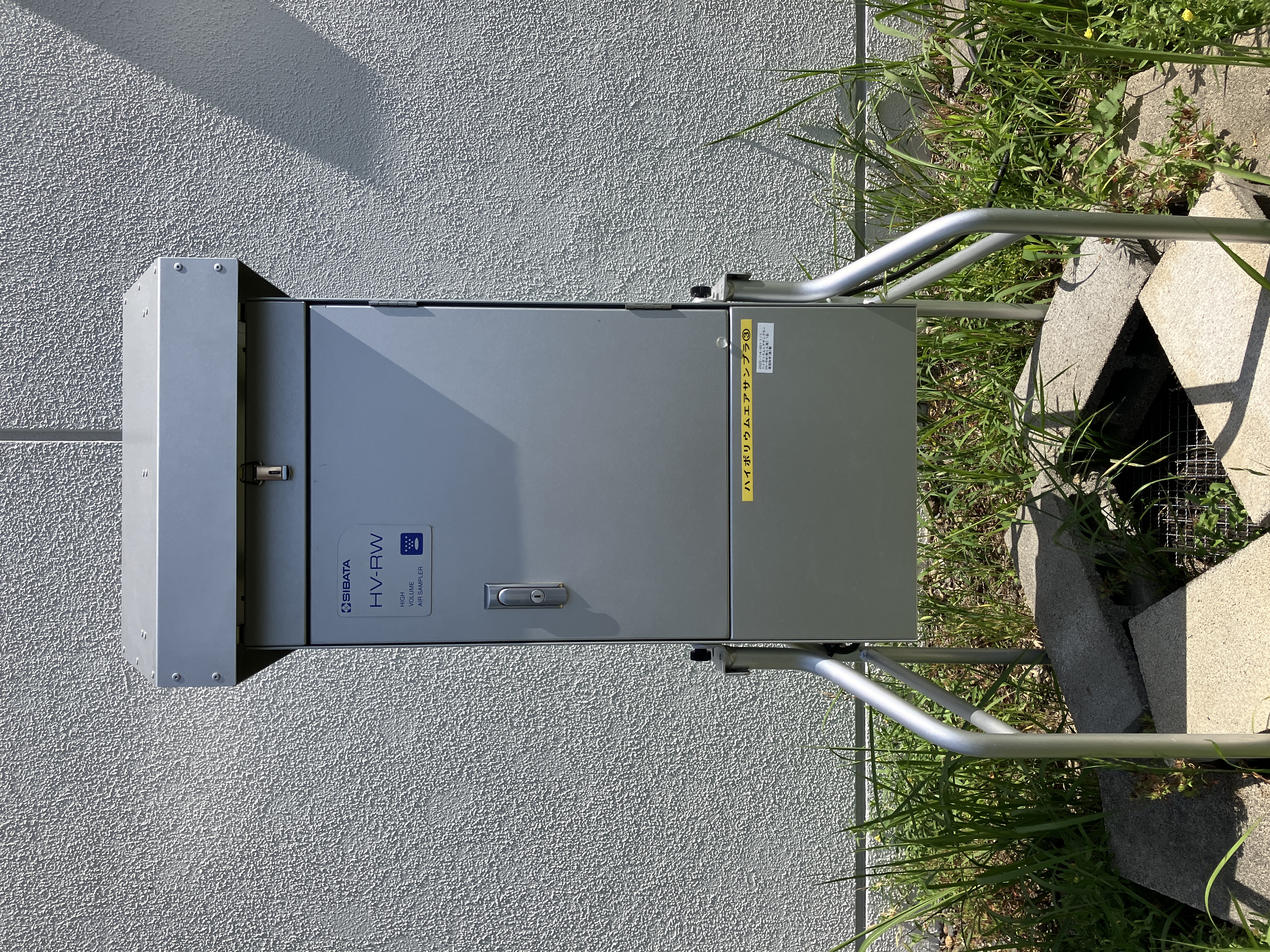
High-Volume Air Sampler
-
2Collection and pretreatment of fallout
For fallout (rainwater, dust, etc.), a large basin (water receiving surface area: approx. 5,000cm2) having pure water to a depth greater than 1 cm is placed at the beginning of each month (12 times a year) to receive fallout for the month.
At the end of the month, the collected fallout sample is transferred to a polyethylene bucket, and dust attached to the basin is scraped off using a rubber scraper and added to the fallout sample. The sample is then placed in an evaporating dish or beaker in appropriate quantities, heated to evaporate and concentrate, transferred to a measurement container and further heated to dryness using an infrared lamp, and the residue is used for analysis.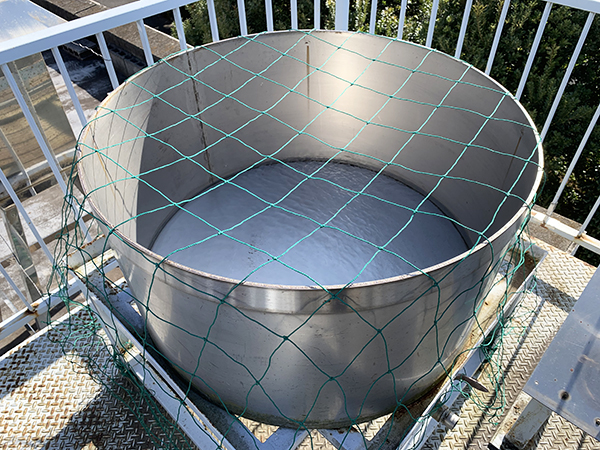
Large stainless-steel basin
-
3Collection and pretreatment of inland water (clean water, fresh water, etc.)
Clean water (source water or tap water) is sampled once a year in June. Source water is collected from the center of the water intake or a source water tap of water purification plants, and tap water is collected from household taps. Fresh water such as lake water is sampled once a year, in which the surface water is collected from the center of the lake avoiding near inflows from and outflows to rivers. The collection volume is 100 L each for clean water and fresh water. The sample is then placed in an evaporating dish or beaker in appropriate quantities, heated to evaporate and concentrate, transferred to a measurement container and further heated to dryness using an infrared lamp, and the residue is used for analysis.
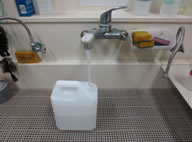
Collecting tap water
-
4Collection and pretreatment of soil (0-5 cm, 5-20 cm)
Soil is collected once a year, around the end of the rainy season. The sampling location shall be selected in an undisturbed area within a relatively large and flat region that represents the surrounding area. A soil sampler with an inner diameter of 5-8 cm is hammered into the ground surface to first collect 2-4 kg of the soil in the surface layer (0-5 cm) and then 6-12 kg of soil in the deeper layer (5-20 cm). The collected samples are fully dried using a drying oven controlled at a temperature of about 105°C, and then crushed and used for analysis.
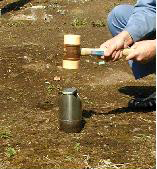
Collecting soil
-
5Collection and pretreatment of sea sediment
Sea sediment is collected once a year (in July or August), at a location with a water depth of more than 1 m at low tide and with little movement of sea sediment, using an Ekman-Birge or plane type mud collector. The amount to collect is 4 kg. The collected samples are treated by leaving them to stand and removing the supernatant or filtering using a large Buchner funnel, spread on an enamel or stainless steel vat, fully dried using a drying oven controlled at a temperature of about 105°C, and then crushed and used for analysis.
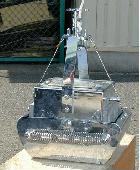
Mud collector
-
6Collection of white rice
White rice is obtained once a year, during the harvest season. The collected amount is about 3 kg, and only those with identifiable production regions are collected.
-
7Collection and pretreatment of vegetables
Vegetables are obtained once a year, during the harvest season. The collected amount is about 4 kg, and only those with identifiable production regions are collected. Parts usually not consumed (e.g., roots) and rotten sections are not included in the sample. The sample is placed in a ceramic evaporating dish, either slowly carbonized using a gas burner or electric heater, or, dried using a drying oven, then placed in an electric furnace and incinerated at a temperature of 450°C for about 24 hours, and used for analysis.
-
8Collection and pretreatment of tea leaves
Tea leaves are obtained once a year, during the first tea picking season. The collected amount is about 500 g, and unprocessed or processed tea with known production regions and collecting periods are obtained from a production plant, etc. The sample is placed in a ceramic evaporating dish, either slowly carbonized using a gas burner or electric heater, or, dried using a drying oven, then placed in an electric furnace and incinerated at a temperature of 450°C for about 24 hours, and used for analysis.
-
9Collection of milk
Milk is obtained once a year, in June. The collected amount is about 3 kg, and domestically produced milk with identifiable production regions is collected.
-
10Collection of sea water
Sea water is collected once a year (in July or August), avoiding areas into which river water flows. Approximately 40 L of sea water is collected from the sea surface using a polyethylene bucket, and placed in a polyethylene container.
-
11Acquisition and sample preparation (including pretreatment) for aquatic products (fishes, shellfishes, and algae)
Aquatic products are obtained once a year, taking into account their seasons. The type and sampling location of aquatic products are selected from the viewpoint of the appropriateness to be surveyed, such as the importance in terms of fisheries business (e.g., large catch) and the length of stay in the relevant waters (fishing grounds), and samples with identified collected waters are acquired. The collected amount is about 4 kg for fishes, 4-5 kg for shellfishes, and 2-3 kg for algae. Obtained samples are first washed with water, dried using filter paper, etc., and pretreated (e.g., deboning and gutting for large fish (small fish is used as is), removing shells from shellfish, and removing root from algae). Pretreated samples are placed in a ceramic evaporating dish, dried by heating for a long period of time using a gas burner or electric heater or by using a drying oven, incinerated in an electric furnace at a temperature of about 450°C for about 24 hours, and used for analysis.
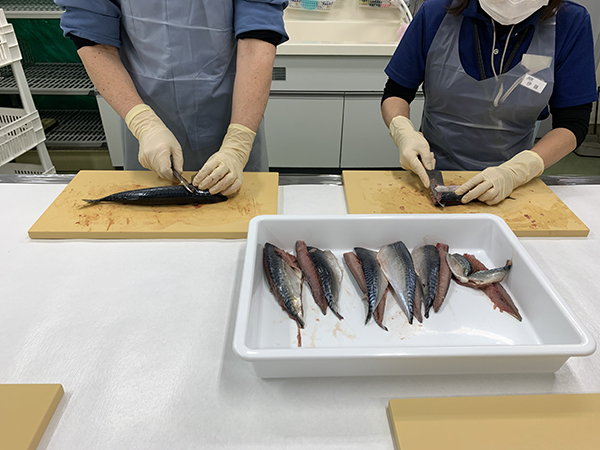
Pretreating fish
-
12Collection and pretreatment of daily food
Daily food is collected twice a year, in June and in November and December. One serving of normal meals (breakfast, lunch, dinner and snacks) for one day is gathered in large polyethylene jars from five households. Parts not consumed, such as fish bones and soy pods, are removed from the collected samples. Since daily food includes drinking water and other beverages, it is heated to remove moisture. The samples are further dried in a drying oven controlled at a temperature of 105°C, incinerated in an electric oven (450°C, about 24 hours), and the incineration residue is used for analysis.
-
13Collection and pretreatment of fixed time rainfall
Fixed time rainfall is to collect rain that has fallen in the preceding 24 hours at a fixed time (usually 9:00 am) every day and to measure the average radioactivity concentration. Samples are collected using a 70A-H radioactive precipitation collector or other similar equipment. Collected samples are mixed well, and then the volume is measured using a graduated cylinder. When the collected volume is 100 ml or less, the entire amount is used for analysis. When the collected volume is more than 100 ml, 100 ml is separated and used for analysis. The sample is placed in an evaporating dish or beaker, evaporated to concentrate, heated to dryness using an electric heater or infrared lamp, and the residue is measured using a low-background beta counter.
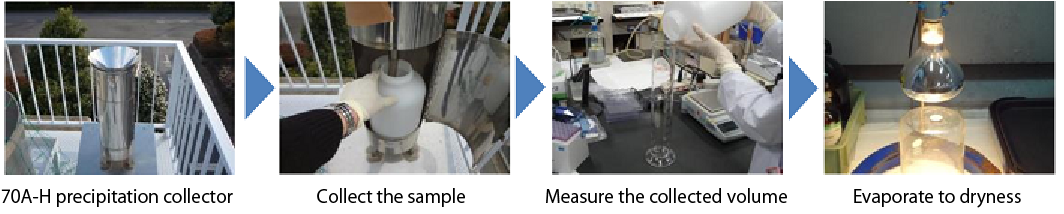
Environmental Radioactivity Analysis and Environmental Radiation Measurement
-
1Radiochemical analysis of Sr-90
The analysis sample is decomposed using nitric acid, etc., to make into a solution. Carbonate precipitate (which contains Sr-90) is formed to separate Sr-90 from Cs-137. Sr-90 contained in the precipitate is separated from other metals such as calcium using the ion exchange resin method. At the time of radioactivity measurement, Y-90 generated from Sr-90 is separated and refined, and the radioactivity of Y-90 is measured using a low-background beta counter.
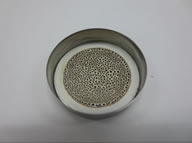
Sr-Radiochemical analysis of Sr-90
-
2Radiochemical analysis of Cs-137
The analysis sample is decomposed using nitric acid, etc., to make into a solution, and carbonate precipitate is formed. The precipitate is used for the analysis of Sr-90. Cs-137 in the supernatant is adsorbed to ammonium phosphomolybdate, and separated and refined using the ion exchange resin method. Precipitate of cesium chloroplatinate is formed, and its radioactivity is measured using a low-background beta counter.
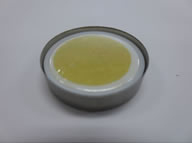
Radiochemical analysis of Cs-137
-
3Air radiation dose rate measurement (measurement at monitoring posts)
Air radiation dose rates are continuously measured using a NaI(Tl) scintillation monitor. A radiation detector is generally installed at a height of 1 meter above the ground. On this website, the current environmental radiation levels (10-minute values) are shown on the Current Environmental Radiation Levels page, and the daily maximum, minimum, and average values are available on the Environmental Radiation Database page.
-
4Air radiation dose rate measurement (measurement using survey meter)
Air absorbed dose rates (μGy/h) are measured using NaI(Tl) scintillation survey meters (portable simple measurement equipment). The radiation detector part is held in a horizontal orientation at a height of 1 m from the ground surface, measured values are read several times at an interval of 10-30 seconds, and an average is derived from the readings.
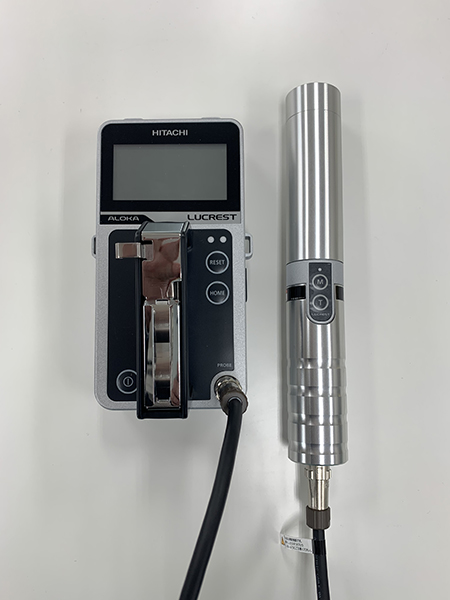
Air radiation dose rate measurement
(measurement using survey meter) -
5Radon measurement
Radon concentration measurement equipment is placed at a measuring position for three months. Airborne radon (Rn-222) that entered into the measurement equipment decays and releases α-rays, and the α-rays leave traces of their flight (extremely minute scar-like traces; called α-track) on a polycarbonate measurement film. The tracks are enlarged by chemical treatment, the number of the tracks is counted under observation of an optical microscope, and the radon concentration is derived.
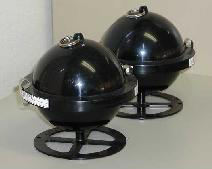
Radon concentration measurement equipment
-
6Gamma (γ)-Ray Spectrometry
By measuring emitted gamma (γ) rays using instruments such as a germanium semiconductor detector, the amount of gamma (γ)-ray-emitting nuclides contained in a sample can be determined. In principle, no pretreatment to separate interfering substances is required. The sample is cut into small pieces or ashed, packed into a measurement container, and then measured using a germanium semiconductor detector or similar instrumentation.
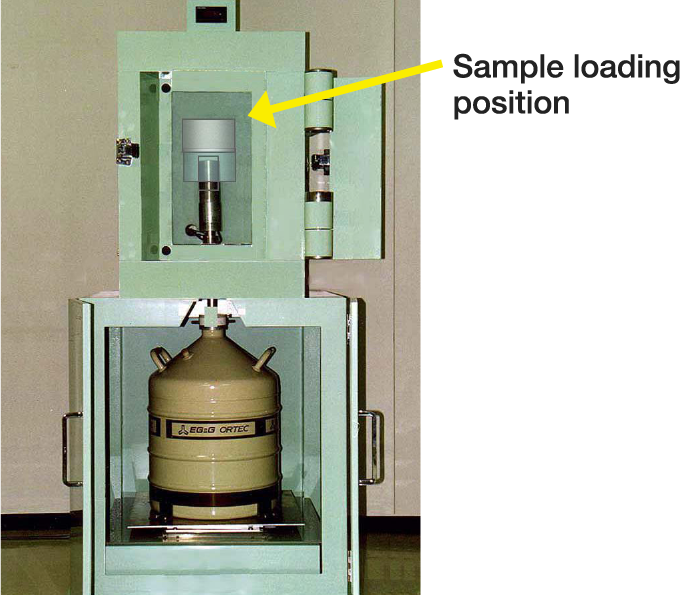
Germanium semiconductor detector
-
7Alpha (α)-Ray Spectrometry
Due to their low penetrating power, alpha (α)-rays are easily blocked by other substances, making it difficult to obtain accurate measurements through direct analysis. Therefore, pretreatment is required to separate interfering substances prior to measurement. As part of this process, separation is carried out using methods such as ion-exchange chromatography. Subsequently, electrodeposition—applying an electric current to plate the sample onto a stainless-steel plate—is performed to prepare the source. By preparing the sample as an extremely thin layer on the plate, the self-absorption of alpha (α)-rays within the sample can be minimized. Furthermore, to prevent alpha (α)-rays from being absorbed by air, the sample is placed in a vacuum chamber and measured using an alpha (α)-ray spectrometer.
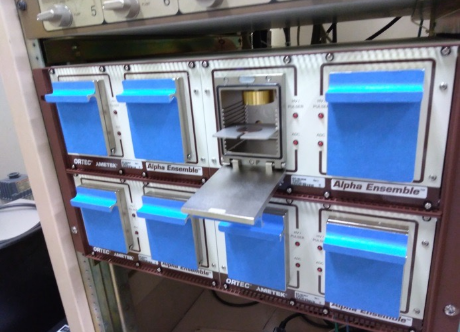
Alpha (α)-Ray Spectrometry
-
8Liquid Scintillation Counting (LSC)
A sample containing beta (β)-ray-emitting radionuclides is mixed with a liquid scintillator, which converts the energy of the beta (β)-rays into light. The light emitted from the mixture is then measured using a liquid scintillation counter.
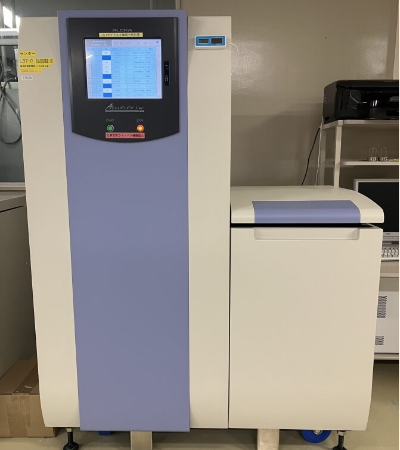
Liquid Scintillation Counting