


Overview
What is iodine-129?*1
Iodine-129 is a radioactive isotope of iodine with a half-life of about 15.7
million years.
Iodine-129 emits primarily β and γ rays and decays to Xenon-129.
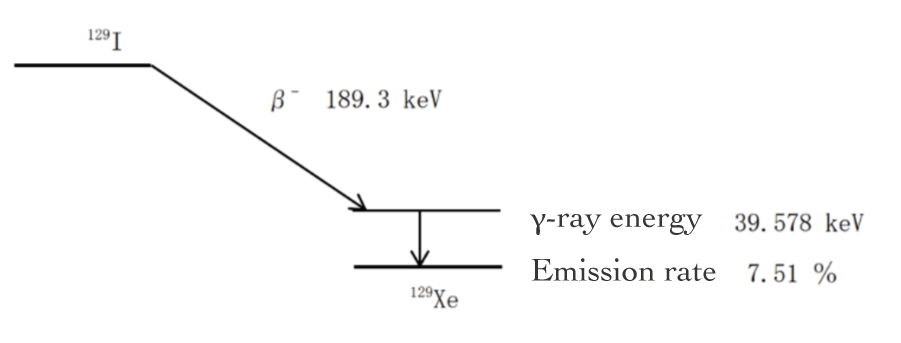
Source of iodine-129*2
Iodine-129 is produced from natural sources, such as radioactivation of material by cosmic ray reactions, and from human sources, such as nuclear tests, nuclear fuel reprocessing plants, and accidents at nuclear facilities.
What is the purpose of iodine-129 analysis and measurement?**2
Iodine-129 has a long half-life and is known to not only persist in the environment for extended periods but
also migrate through various environmental samples. Therefore, iodine-129 is considered to be an important
nuclide in environmental impact assessments, and it is important to understand and evaluate its
environmental radioactivity level.
The primary source of iodine-129 in the environment is emissions from nuclear fuel reprocessing facilities and other sources.
In the "Routine Monitoring (Supplementary Reference Material for the Guidelines for Nuclear Emergency Preparedness)," iodine-129 is excluded from routine monitoring targets due to its relatively small contribution to the total dose from facility-related sources and the associated measurement challenges. However, in monitoring the vicinity of reprocessing facilities, it is essential to assess the long-term accumulation and variability trends of iodine-129, considering the operational status of the facility.
Furthermore, the Comprehensive Monitoring Plan, developed to ensure reliable and systematic environmental radiation monitoring outside the Tokyo Electric Power Company (TEPCO) Fukushima Daiichi Nuclear Power Station, emphasizes the importance of assessing long-term variability trends in seawater and marine organism monitoring.
How do we analyze and measure iodine-129?
Iodine-129 is analyzed and measured in various ways depending on the purpose of the investigation and research.
(1) Radiochemical analysis
Radiochemical analysis is primarily conducted by local governments and
industries for environmental radiation monitoring around reprocessing facilities.
The method involves preparing measurement samples through chemical analysis tailored to the sample,
followed by measuring the β or γ radiation of iodine-129. This approach is widely employed due to the
availability of common equipment and instruments.
In the analytical process, iodine is purified by solvent extraction after pretreatment operations such
as combustion and ion exchange, depending on the sample type. The purified iodine is then converted into
palladium iodide precipitate for measurement.
(2) Inductively Coupled Plasma Mass Spectrometry (ICP-MS) / ICP-MS/MS (Triple Quadrupole ICP-MS)
This method is primarily employed in marine monitoring conducted under the
Comprehensive Radiation Monitoring Plan.
It involves preparing measurement solutions through chemical treatment tailored to the specific sample,
followed by analyzing the target isotopes. Compared with conventional radiochemical analysis, ICP-MS
offers excellent sensitivity and rapid measurement, and despite the relatively high cost of the
instrumentation, its use has become increasingly widespread in recent years.
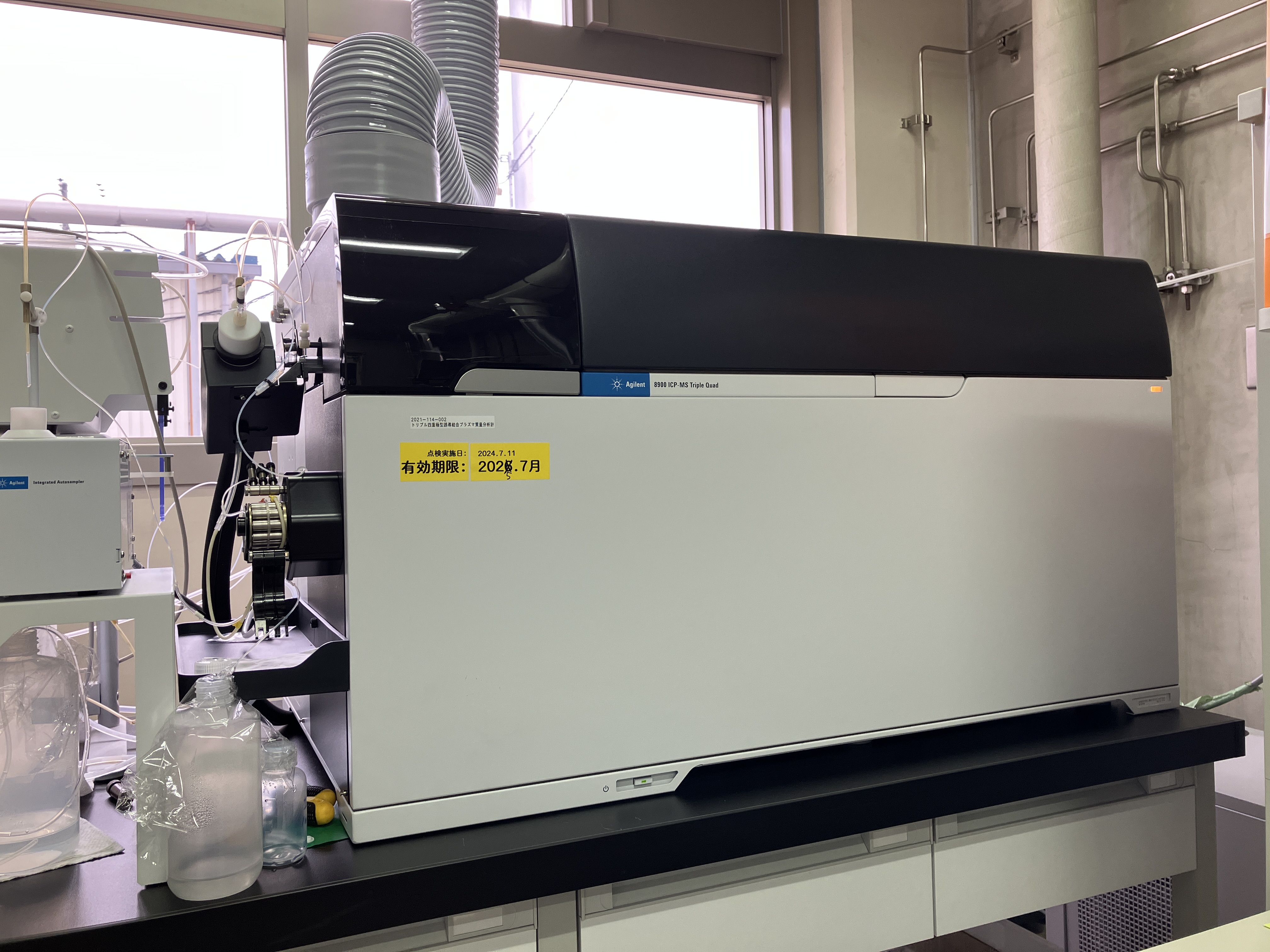
Triple quadrupole ICP-MS, also referred to as ICP-MS/MS, is an advanced instrument that features an
additional quadrupole and a collision/reaction cell configured in series with a conventional ICP-MS
system. This setup effectively eliminates spectral interferences, enabling even more precise trace-level
analysis.
(3) Accelerator mass spectrometry (AMS)
Accelerator Mass Spectrometry (AMS) is primarily employed by research institutions for analyzing environmental samples within research contexts. This method involves preparing measurement samples through chemical treatment tailored to the specific sample, followed by the use of an accelerator to measure the target isotopes. At present, it offers the highest sensitivity available for the quantification of iodine-129. However, because the measurement system is extremely large and expensive, it has not achieved widespread general use, and the number of analytical institutions capable of performing such measurements remains limited.
Analytical flow: Inductively Coupled Plasma Mass Spectrometry (ICP-MS/MS (Triple Quadrupole ICP-MS))
Water

Filtration
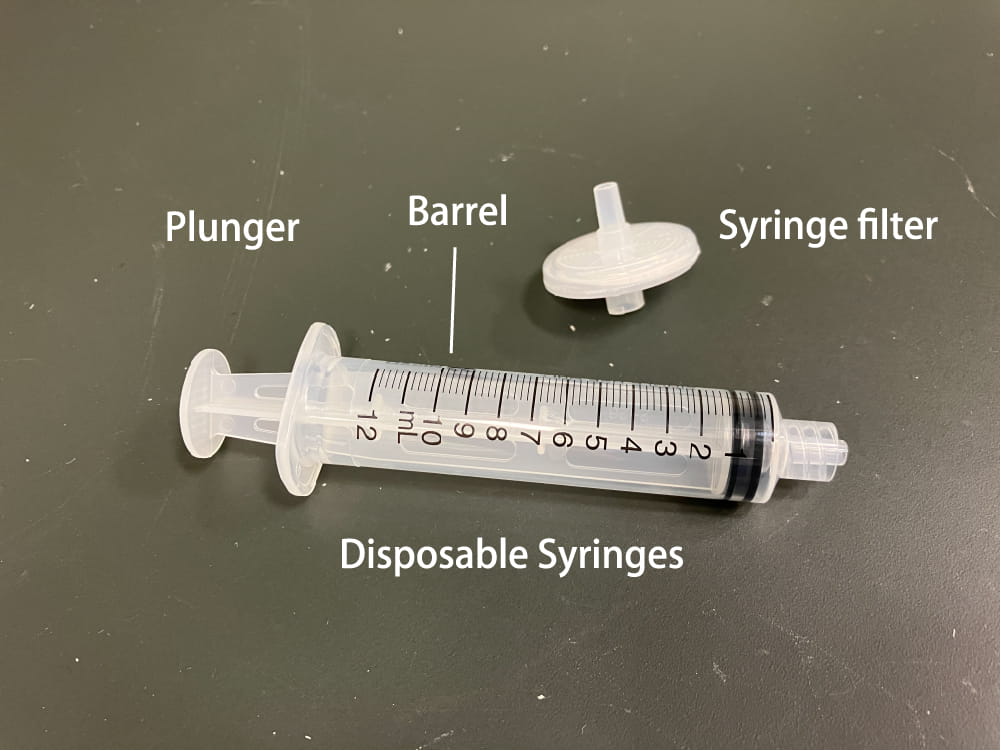
Extraction and constant volume
ICP-MS/MS
Organism
Freeze-drying
Dry matter
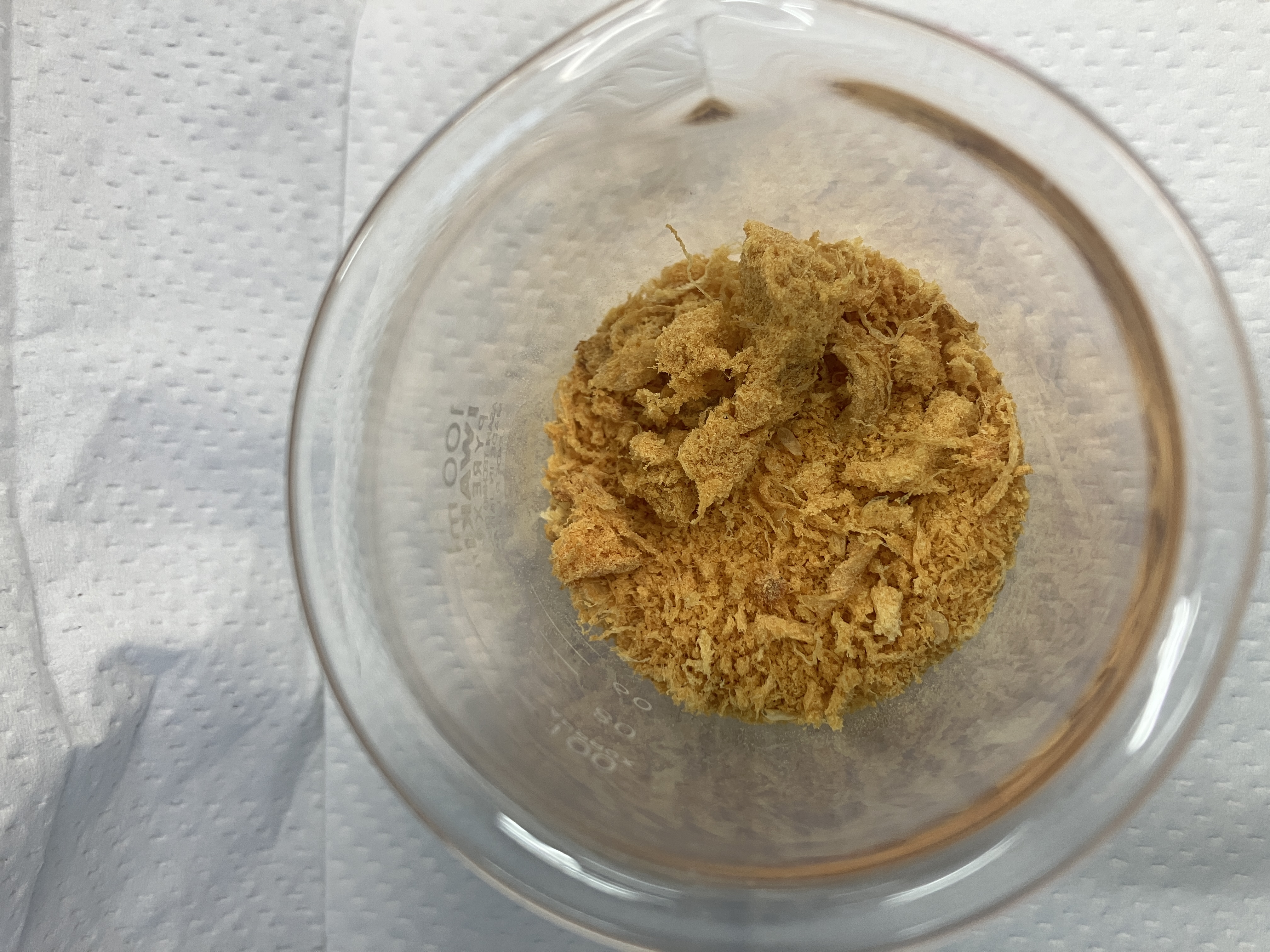
Thermal hydrolysis
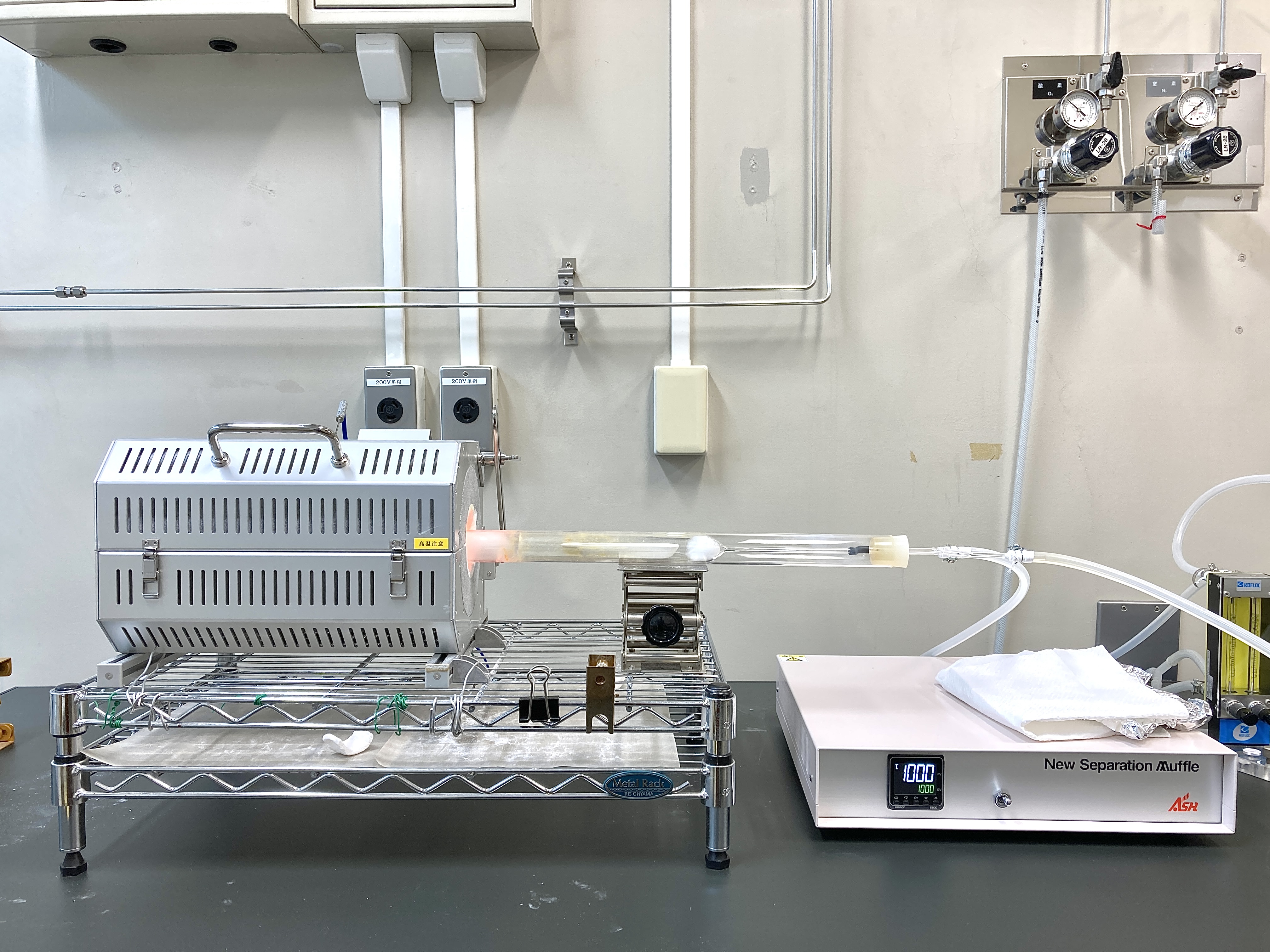
Extraction and constant volume
ICP-MS/MS
Analytical flow: Accelerator Mass Spectrometry (AMS)
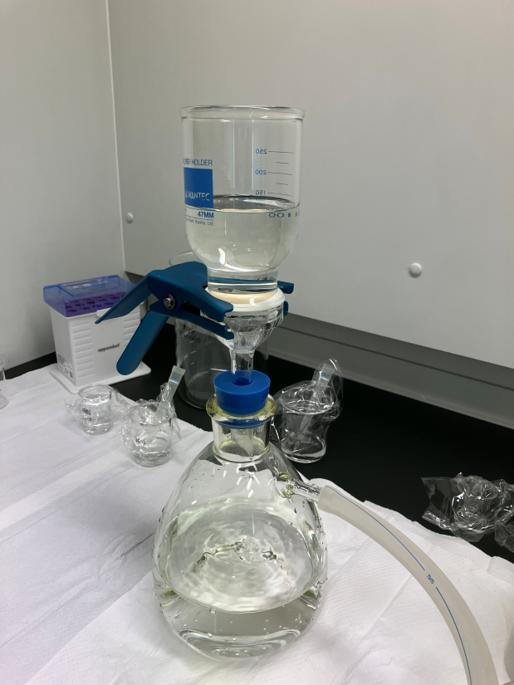
Seawater
Filtration
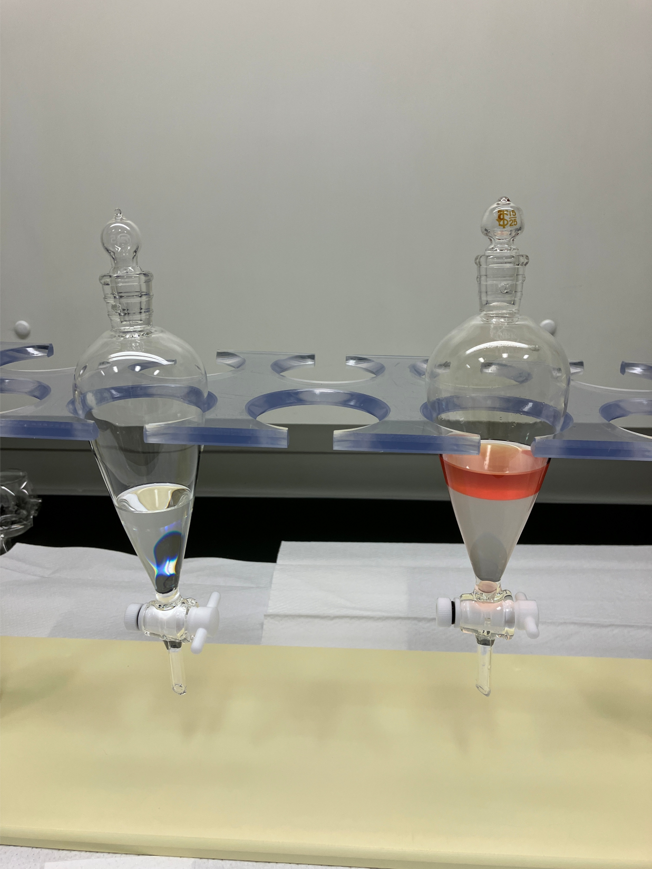
Solvent extraction
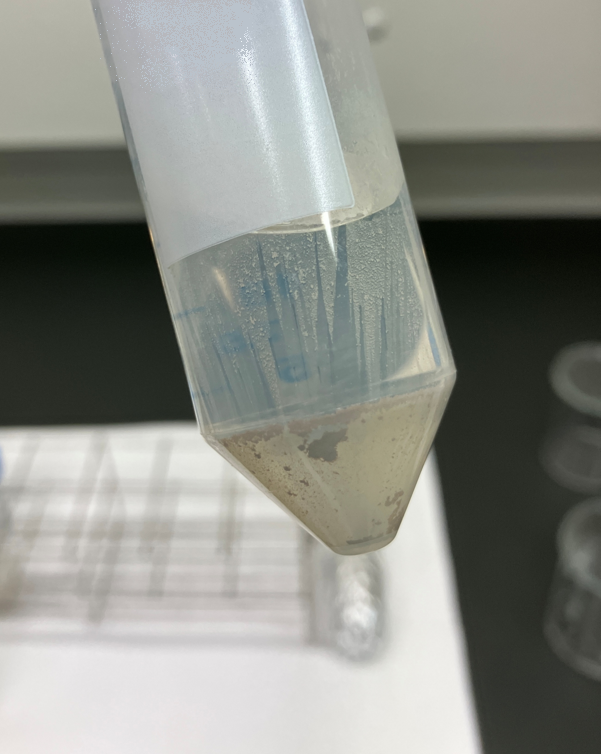
Silver iodide precipitation
Target sample preparation
AMS measurement
Organism
Freeze-drying
Thermal hydrolysis
Solvent extraction
Silver iodide precipitation
Target sample preparation
AMS measurement
Topics
Topics1
About iodine-131*1,*2
Iodine-131 is a radioactive isotope of iodine with a half-life of only approximately eight days. Like
iodine-129, it is primarily produced by human activities, such as nuclear accidents.
Given that iodine accumulates in the thyroid gland, there was concern about thyroid exposure to iodine-131
following the TEPCO’s Fukushima Daiichi nuclear disaster. However, due to its short half-life, sufficient
measured data for estimating individual thyroid doses was not available.
To estimate and evaluate iodine-131, a methodology was developed to infer iodine-131 levels based on the
measured amounts of iodine-129.
Topics2
Chemical forms of iodine and the types of solvents*3,*4
Iodine is an element that can easily change chemical forms. There are multiple iodine chemical forms in
environmental samples, including I, IO3, and organic iodine.
Iodine has been reported to exhibit sensitivity differences towards I- and IO3- ions depending on the type
and concentration of the solvent where iodine is present. Therefore, especially in ICP-MS measurements, it
is important to note that the results may differ depending on the type and concentration of solvent.
Even if the solvent type and concentration are the same, the chemical form of iodine can affect the
analysis and measurement.
Topics3
Beware of light
Iodine is susceptible to photolysis, meaning it can be decomposed when exposed to
light. Therefore, it is essential to store iodine in dark conditions.
Several methods can be employed to protect iodine from light, including storing it in amber glass vials,
wrapping it in aluminum foil, or placing it on light-proof shelves.
Related radioactivity measurement series

References
-
*1
Evaluated Nuclear Structure Data File. https://www.nndc.bnl.gov/ensdf/ , (cited 2024-10-1)
-
*2
Maki Honda. A compilation of the 10-year studies on 129I in the terrestrial environment after the Fukushima Dai-ichi Nuclear Power Plant accident. Geochemistry. 2021. vol. 55, p. 176-192.
-
*3
“G. Grindlay. et al. A systematic study on the influence of carbon on the behavior of hard-to-ionize elements in inductively coupled plasma‒mass spectrometry. Spectrochimica Acta Part B: Atomic Spectroscopy. 2013. vol. 86, p. 42-49.”
-
*4
Y. Takaku. et al. Iodine determination in natural and tap water using inductively coupled plasma mass spectrometry.
Analytical Sciences. 1995. vol. 11, p. 823-827 .