


Overview
What is 90Sr?*1, *2, *3
90Sr is a radioactive isotope of strontium with a half-life of 28.91 years. It is a "pure β-emitting nuclide" that undergoes β decay, emitting beta rays but no γ rays. Radioactive strontium isotopes are primarily produced through the fission of 235U and other fissile materials and are known for their high fission yield. There are multiple radioactive isotopes of Sr. Due to their half-lives and the nature of the radiation they emit, 89Sr and 90Sr are the primary targets for environmental radiation monitoring.
90Sr analysis objective*4
Strontium belongs to group 2 (alkaline earth metals) of the periodic table. Its chemical behavior is similar to other homologous elements such as calcium and barium, which means that when entering the body, strontium is deposited in the bone tissue together with calcium, resulting in bone marrow exposure and other health effects. Consequently, when released into the environment due to atmospheric nuclear testing or nuclear power plant accidents, it is an important nuclide in exposure dose assessments to monitor along with radioactive iodine and radioactive cesium.
Main analysis methods of 90Sr (Based on Separation and Purification)
Ion exchange method
The ion exchange method is a method for separating strontium from other alkaline earth metals, such as calcium, by utilizing the difference in the distribution coefficients of cationic metals for the cation exchange resin. A sample solution is passed through a column filled with strongly acidic cation exchange resin. For samples with high calcium concentrations exceeding the ion exchange capacity of the resin column, a series of resin columns may be employed to ensure complete separation.
Fuming nitric acid method
A method of separating Sr and Ca by utilizing the difference in solubility between strontium nitrate and calcium nitrate at a nitric acid specific gravity of 1.45 (about 77% of nitric acid concentration). Since complete separation and removal of Ca cannot be achieved in a single operation, it is necessary to repeat the formation of nitrate precipitates, and fuming nitric acid must be handled with extreme care. Additionally, separation and removal of homologous elements other than Ca are required.
Oxalate process
This is a method to separate Sr from many cationic metals by utilizing the difference in solubility of oxalate salts. While this method is simple because Ca is not separated and removed, it has disadvantages compared to the ion exchange method, such as the large volume of equipment used and complicated analytical procedures. In addition, when strontium carbonate precipitates are used as the measurement sample, calcium carbonate precipitates are included in the measurement sample because Ca is not separated and removed. As a result, the analysis is limited to 90Sr only, as 89Sr cannot be measured.
Analytical flow (ion exchange method)
Seawater sample
Large ion exchange resin column
Cleaning

Elution
Carbonate precipitation
Ion exchange resin column
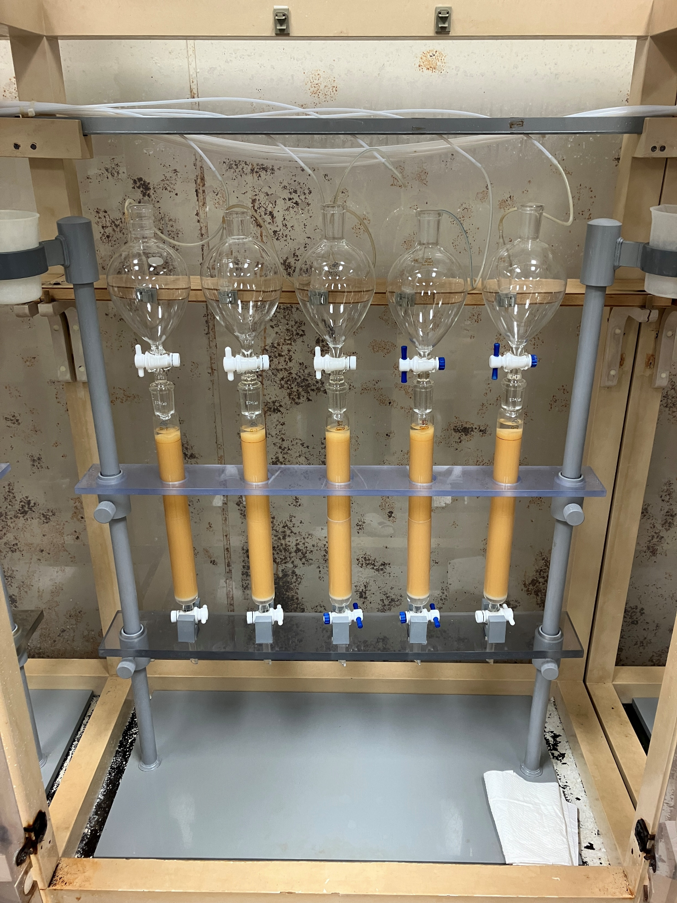
Cleaning
Elution
Scavenging
ICP-AES
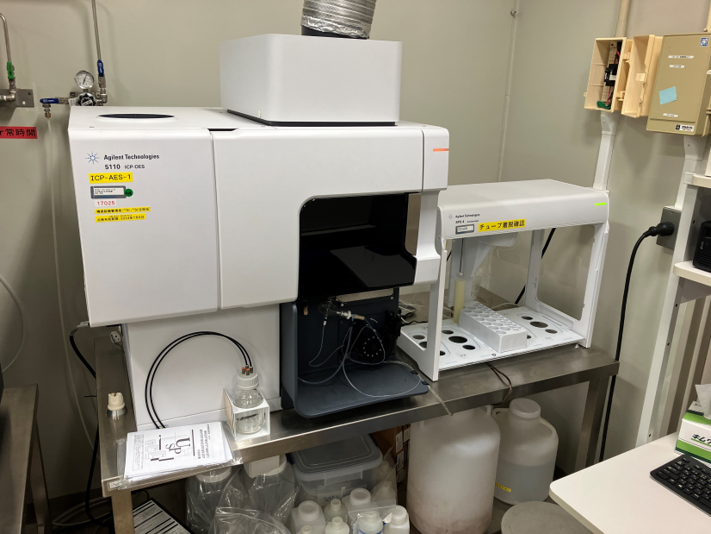
Recovery rate measurement
Milking
LBC
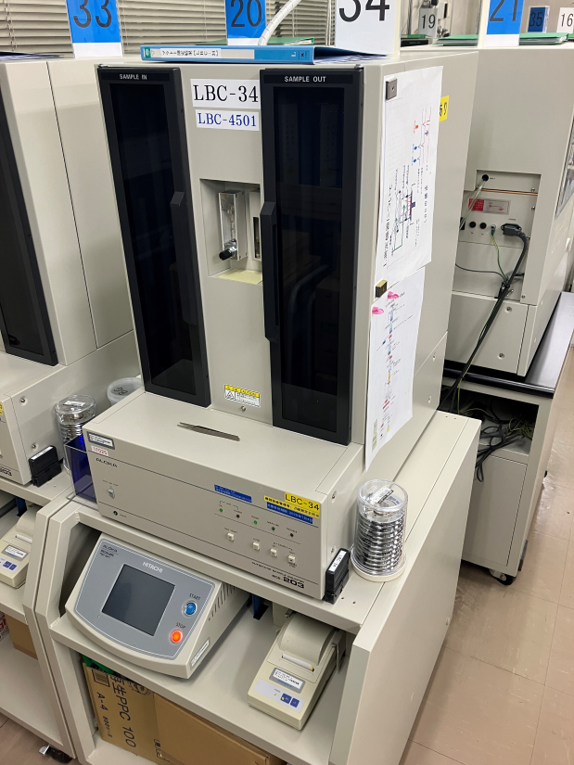
Measurement
Topics
Topics1
Is that calibration factor really right?
The calibration factor of a measuring instrument should be periodically verified.
If the same calibration factor has been used for years, it may have shifted without your knowledge. Even
institutions that claim to regularly verify their calibration factors should exercise caution. Have you
compared the re-checked calibration factor to previous values to ensure there are no sudden changes? Is it
suddenly going down or up? If so, you should question whether the calibration factor you have just
re-obtained is correct.
In all analytical work, it is important to maintain a critical eye and question any results that seem
unusual. Is anything unusual happening? Do you feel any sense of discomfort? A small discrepancy can
sometimes indicate a significant error.
Topics2
LBC? LSC?
The mainstream method of measuring 90Sr analysis uses either LBC or LSC. Although the English abbreviations are similar, LBC is a low background 2π gas flow counter, and LSC is a liquid scintillation counter. If you are using them for other analyses, you can use them concurrently. Both methods offer comparable analytical performance, but their primary difference lies in waste disposal after measurement. The LBC uses noncombustible stainless steel sample vessels, which must be disposed of as noncombustible waste. The LSC is mixed with a scintillator, and the liquid waste must be disposed of as organic solvents. Considering the disposal of samples containing efficiency-tracing radioisotopes, the choice between LBC and LSC involves a trade-off between waste handling and analytical performance.
Related radioactivity measurement series

References
-
*1
Nuclear Regulation Authority. Nuclear Emergency Preparedness Guidelines. Fully revised on September 11, 2024.
-
*2
Radiation Monitoring Division, Nuclear Regulation Authority. Routine Monitoring. Supplementary Material of the Guidelines for Nuclear Emergency Preparedness. Revised on December 21, 2021.
-
*3
Nuclear Regulation Authority, Monitoring Information Division. On Emergency Monitoring. Supplementary Reference Materials for Nuclear Disaster Preparedness Guidelines. Partially revised on March 21, 2024.
-
*4
N. Vajda, C. Kim. Determination of radiostrontium isotopes: A review of analytical methodology. Applied Radiation and Isotopes.
2010. vol. 68, no. 12, p. 2306-2326.